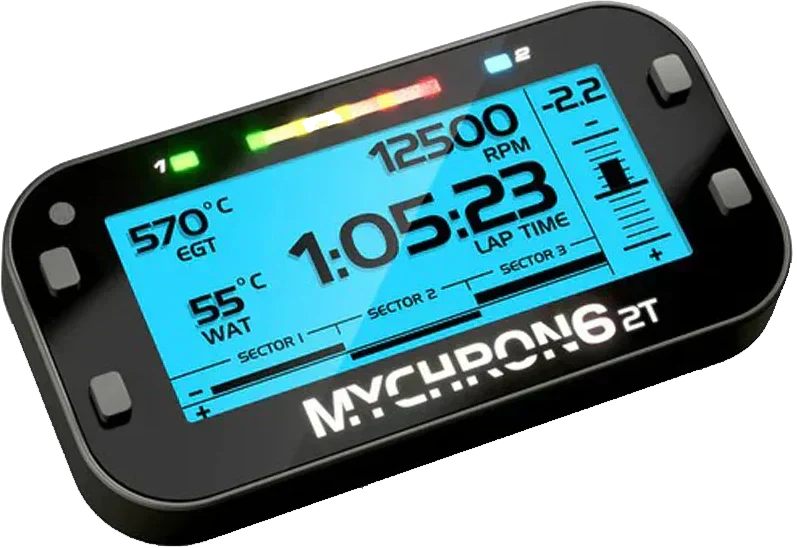

Karting electronics have evolved beyond simple gauges. Today's top competitors use a mix of telemetry systems, temperature sensors, transponders, and video tools to gather real-time data on engine performance, driver inputs, and lap times. This information reveals where you're losing speed, prevents costly engine failures, and shows exactly what's happening on track.
Electronics don't make you faster by themselves. But they show you how to get faster. Instead of guessing why you're down three-tenths, the right tools give you the answer. A temperature sensor catches a lean condition before it destroys a motor. Overlaying data from your gauge between two sessions shows where you lost time. A camera mount with video sync lets you see what is happening when you start making driving mistakes on track.
You don't need to buy everything at once. Most serious racers start with a core telemetry system and add sensors and tools over time as budget allows. At Comet Kart Sales, the top-selling electronics reflect what experienced racers are actually choosing to build their setups.
This guide covers the top-selling electronics from Comet Kart Sales. Whether you're choosing your first gauge or filling gaps in an existing setup, here's what serious racers are using to improve performance.

AIM's Mychron 6 is the industry standard data logger for competitive karting. It combines lap timing, engine telemetry, and performance analysis in a single gauge that mounts on your steering wheel. The 1T designation means it accepts one engine temperature sensor (you choose the type at purchase), making it the entry point into serious data collection.
Display and design: The Mychron 6 features a 320x136 pixel screen that fits in a compact 150mm x 79mm housing, weighing only 370 grams. The aluminum body is fully waterproof (IP67 rated) and handles the vibration and moisture common in karting. Eight configurable RGB backlight colors let you customize the display appearance and adjust brightness for various lighting conditions at the track. The screen shows lap time, RPM, temperature data, GPS position, and customizable performance metrics all simultaneously or on different pages you can swipe through.
Engine monitoring: Integrated 25Hz GPS automatically recognizes your location and loads the correct track database from over 4,000 worldwide circuits, eliminating manual track entry. This accuracy matters for consistent lap time comparisons across different visits. The device captures RPM data through the included RPM cable that clips directly to your spark plug wire. The single temperature sensor slot accepts several options depending on your engine type. For four-stroke engines and single-cylinder two-strokes, the cylinder head temperature sensor (14mm for most engines, 10mm for World Formula) mounts on the engine head and shows how hot your combustion chamber runs. For two-cycle engines, you can choose exhaust gas temperature (EGT) sensors in multiple thread sizes and bend angles depending on your exhaust setup and what your engine builder recommends. EGT directly reflects fuel mixture quality: lean runs hotter, rich runs cooler. You also have water temperature sensor options for water-cooled engines.
Data collection and analysis: The Mychron 6 records 25Hz GPS data continuously during sessions, capturing lap times to millisecond precision. A delta bar on the display shows real-time lap comparison, letting you see instantly whether you are faster or slower than your previous lap in each corner. Data transfers to your computer via USB-C or WiFi for deeper analysis using AIM's Race Studio 3 software, where you can overlay multiple laps, compare braking points, analyze corner speeds, and identify exactly where you lose time.
Battery and power: The included lithium battery provides approximately 20 hours of continuous operation per charge, easily lasting a full weekend of practice and racing. The battery charger connects via USB-C.
Upgradability limitation: The 1T model accepts only one temperature sensor. Unlike the 2T version, you cannot upgrade later to add a second sensor. If you think you might want dual temperature monitoring (like EGT plus water temp, or EGT plus CHT), the 2T model at around $759 is the better choice despite the higher initial cost, as you avoid needing to purchase a second gauge later.
Compatibility: Works with Briggs LO206, Vortex ROK, Rotax, IAME, clone engines, and any engine that produces RPM signal. You choose your temperature sensor type at purchase based on your specific engine and monitoring needs.

The AIM Mychron 6 2T is identical to the 1T except for one critical difference: it accepts two temperature sensors instead of one. This gives you simultaneous monitoring of two engine temperature parameters, which transforms how deeply you can understand your engine's behavior.
The 2T comes with the same 25Hz GPS lap timing, 6-axis IMU, 20-hour battery life, and IP67 waterproof rating as the 1T. The display, processor, and connectivity are identical. The only difference is capacity: you choose two sensors from EGT, CHT, or water temp, and monitor both in real time.
Why racers choose it: one sensor is useful, but two sensors tell a complete story. A must have for water cooled engines. The most popular combination is EGT and Water together. EGT shows whether you're running lean or rich. Water shows where your radiator system is running at so you can maintain proper water temperature. Together, they answer the real question: is the engine safe and running at top performance?
The two alarm LEDs work independently, so you can set different warnings for each sensor. If EGT climbs too high, one LED alerts you. If water temp exceeds limits, the other LED lights up. This redundancy prevents you from missing critical information during a session.
The tradeoff: you pay around $100 more than the 1T, but you gain complete engine visibility. Most serious competitors eventually choose the 2T because data from two angles beats guessing from one.
This is the standard choice for racers who plan to stay in the sport and develop their program. It also future-proofs you if you decide to go from an air cooled engine class to a water cooled engine class.
Odenthal makes precision-machined aluminum GoPro mounts designed to attach to your kart's seat strut. These mounts come in two versions based on your kart's cooling setup. Both are machined from aerospace-grade 6061-T6 aluminum with tight tolerances to prevent loosening or vibration during racing.
Short version (Around $180): Built for air-cooled karts without radiators. This version uses a single 7-inch aluminum bar and provides a compact mounting solution for karts with simpler engine bay layouts. The short bar keeps the mount close to the seat strut, reducing overhang.

Long version (Around $216): Built for water-cooled karts with radiators. This version comes with two 7-inch aluminum bars that accommodate the larger radiator assembly and keep the camera angled properly despite the additional cooling equipment. The extended bars give you more positioning flexibility for radiator clearance while maintaining proper camera angle.

Construction: Both versions use stainless steel hardware throughout to resist corrosion from track exposure, water, and cleaning. The tight machining tolerances prevent the camera from shifting or loosening during aggressive cornering and bumps. Odenthal recommends pairing these mounts with the Odenthal Tuff-Kase aluminum protective case for your GoPro rather than the standard plastic housing, which provides better shock absorption.
Why you need it: Onboard video is the second half of data analysis. Your Mychron tells you what happened. Your camera shows you why. You can see your braking point into a corner, your line through technical sections, and how much throttle input you are using on corner exit. This visual confirmation catches things data alone misses. Are you steering too much through a corner, wasting speed? The video shows it. Is your body position throwing off weight distribution? You will see it on playback.
The seat strut location is strategic. The camera sits where your body acts as a natural shock absorber, dampening vibration compared to mounting on the nose or radiator where the camera experiences constant shaking. This results in clearer, more stable video.
Compatibility: Works with standard GoPro mounts and any modern GoPro model (Hero 10, 11, 12, 13 Black are common choices). Most racers already own a GoPro for other footage, so this mount only requires you to buy the bracket itself.
What racers do with it: Mount your GoPro on one of these brackets, let it record your entire session, then review the footage at the paddock paired with your Mychron data. Combined with telemetry, video becomes a coaching tool that shows both numbers and context. GoPro is now the official action camera partner of the FIA Karting World Championship, which tells you something about its reliability and importance in the sport.
Setup cost: Just the mount and a GoPro camera. It is one of the cheapest ways to add a new dimension to your performance analysis.

The MYLAPS TR2 is a rechargeable radio frequency transponder that broadcasts a unique signal to timing loops at the track. Every time your kart crosses the start/finish line and intermediate detection points, the signal is picked up and your exact position and time are recorded. The TR2 is the world-leading standard in accuracy, with signal optimization specifically designed for karting.
The kit includes the transponder itself, a charging cradle that fully charges in approximately 5 hours, and a USB cable for connecting to the Speedhive app. A single charge provides enough battery power for five days of continuous racing. The transponder is IP67-rated, meaning it is completely waterproof and dustproof. It can handle track conditions, weather, dirt, and water spray without any issues. Installation is simple: mount the transponder vertically using the included holder, keeping it below 30 centimeters above ground for optimal accuracy.
Subscription options are flexible. You can purchase 1-year, 2-year, or 5-year subscriptions based on your racing plans. A no-subscription "Go" version is also available if you prefer not to pay ongoing fees. When your subscription is active, the transponder comes with unlimited warranty and insurance. If your transponder fails during normal use, MYLAPS replaces it free of charge.
Why it matters: most racing series require the use of the MyLaps transponder for their timing systems. You can rent or you can own and rental costs add up over time.
Data access: all your lap times upload to the free Speedhive platform via Bluetooth when you pair your transponder with the Speedhive app. You can access, analyze, and compare your lap times from your phone immediately after sessions. The transponder is recharged by simply placing it in the charging cradle, and Bluetooth connectivity means subscription renewal is handled directly from your phone instead of visiting a website.
This is the essential piece of any serious kart racing program. The TR2 is the same technology used at professional karting championships worldwide.

The SmartyCam 3 Sport is a purposefully-designed motorsports camera that combines Full HD video recording with real-time data overlay and built-in telemetry logging. Unlike a GoPro or standard action camera, the SmartyCam is engineered from the ground up for racing. It features a 1920x1080 resolution sensor shooting at 30 FPS with optimized H.264 compression that balances video quality with file size. The lens offers an 84-degree field of view to capture your racing line, steering inputs, and braking points without the distortion typical of ultra-wide action cameras.
The camera body is machined from aerospace-grade aluminum with internal electronic components potted and sealed for durability. It features a Global Shutter CMOS sensor instead of the rolling shutter design found in consumer action cameras. This matters because rolling shutters cause a "wave" or "jello" effect when cameras vibrate at high engine RPM. At 7,000 RPM and up in a two-cycle engine, that vibration is constant and severe. The Global Shutter eliminates this problem entirely, producing smooth, clean video even when your kart is running wide open.
The SmartyCam 3 Sport is IP65-rated for waterproofing and includes a sapphire-glass front lens that resists scratching and damage from pebbles, insects, and dirt kicked up during racing. It has a 350mAh rechargeable lithium battery built internally, though the camera can also draw power externally from your kart's electrical system (9-15 volts). Auto start-stop technology means the camera automatically begins recording when you power up your kart and stops when you kill the engine, eliminating the need to manually manage the camera while you're focused on racing.
Data overlay capability: The SmartyCam records all data it receives from connected AIM loggers like the Mychron 6 directly into the video file. When you connect the camera via CAN to your Mychron, it captures speed, RPM, lap times, lap numbers, throttle position, braking input, G-forces, and any other channels your Mychron is logging. This data appears as overlays on the video in real-time with no post-processing sync needed. You can customize the overlay layout completely using Race Studio 3 software, choosing which data points appear where on screen, changing colors, adding your logo, and displaying the track map.
Video storage: The camera supports microSD cards up to 2TB. AIM provides three recording quality options: high quality (4GB per hour), standard quality (2GB per hour), or lower quality (1.5GB per hour). Most racers use standard quality, which provides excellent video clarity while keeping file sizes manageable for quick downloads at the track.
Built-in data logger: All data received through CAN connections is recorded into the video file itself. When you import the video into Race Studio 3 along with your Mychron data file, the software automatically synchronizes them. You can then compare two laps from different sessions side-by-side, with video and telemetry running in sync. This shows you exactly what throttle and steering inputs were different between a fast lap and a slow lap, and you can see it happening on video simultaneously.
Two-port data hub option: The version available with the Two Port Data Hub includes an external power supply and allows you to connect multiple AIM devices to a single CAN network. This is useful if you're adding additional sensors or expansion modules beyond your Mychron, though many racers purchase the camera without the hub and power it directly from their Mychron or another AIM device.
Why racers choose it: A GoPro gives you visual reference, which is valuable. The SmartyCam 3 Sport gives you video plus complete integration with your telemetry system. You can watch your lap and simultaneously see every piece of data. Some racers use it to analyze body positioning relative to throttle and steering inputs. Others overlay two laps to identify exactly where they're losing tenths. The automatic track recognition pairs with the built-in GPS when you connect a GPS module, allowing the camera to automatically recognize which circuit you're at and calculate accurate lap times without manual setup.
This is the step up from basic video. If you already have a Mychron data logger and want to connect video to your telemetry analysis, the SmartyCam 3 Sport eliminates the need for post-production software syncing and gives you overlay capabilities that a GoPro cannot match. Setup is straightforward: mount it on your kart, connect the CAN cable to your Mychron, insert an SD card, and the camera handles everything else automatically.

The Odenthal Antivibration Isolator Mount is a billet aluminum mounting bracket designed to decouple your camera from kart vibration. It works by inserting elastomer damping material between the camera and the mounting hardware. The isolator itself is machined from 6061-T6 aluminum and includes replaceable elastomer rubbers (available in blue or red stiffness options) that absorb high-frequency vibration before it reaches your camera.
Why vibration matters: when you're running at 7,000-17,000 RPM on a two-cycle engine, the engine creates constant vibration that transmits through the frame and seat struts. Consumer action cameras like GoPro use rolling shutter sensors that can struggle with this environment. Direct mounting to aluminum hardware transfers every bit of that vibration into the camera, which can cause rolling shutter artifacts in video playback. More importantly, sustained vibration can cause cameras to malfunction. In extreme cases, high-frequency vibration causes cameras to power cycle or shut down during sessions. This isolator absorbs that vibration before it reaches the camera body.
Construction: the isolator is lightweight and compact, designed to work with both GoPro cameras and AIM SmartyCam 3 cameras. The elastomer inserts are tuned to dampen vibration in the frequency range typical of karting engines. If vibration characteristics change between tracks or engine types, you can swap the rubber inserts to stiffer or softer options depending on what works best for your specific kart.
Compatibility: works with standard GoPro mounts and also interfaces with SmartyCam 3 cameras. The isolator bolts between your mounting bracket and the camera itself, so it adds minimal weight and takes up almost no additional space. It pairs well with Odenthal's standard aluminum camera mounts and with the seat strut mounting options.
When to use it: if your video footage shows excessive vibration artifacts or rolling shutter distortion, this isolator will improve picture quality noticeably. It's also useful as a preventive measure if you run at high RPM or on rough track surfaces where vibration is severe. Combined with an aluminum protective case for your camera (as Odenthal recommends), the isolator further isolates the camera from shock and vibration during crashes or aggressive bumps.
This is a low-cost accessory that extends camera lifespan and improves video quality. It solves a real problem that GoPro users encounter in two-cycle karting, where engine vibration is more pronounced than in four-stroke engines.
 The Oppama PET-3200R is an ultra-compact digital hour meter that counts and records the cumulative operating time of your engine. It measures 30mm by 30mm by 14mm and weighs only 15 grams, making it one of the smallest and lightest engine timers available. The device reads induction pulses directly from your engine's ignition cable, meaning it requires no external power source and provides accurate run-time tracking with 1-minute resolution.
Installation is straightforward. You zip-tie the Oppama directly onto your spark plug wire (no external signal wire required), and it immediately begins counting engine hours. The display shows both hours and minutes. An optional PKT cradle is available separately that clips directly to the spark plug cable for a cleaner installation if you prefer not to use a zip tie.
Specifications: The unit is waterproof and powered by an internal battery rated for approximately 5 years of operation. It includes a built-in reset function that you can use after engine service to clear the accumulated hours and start fresh. The device is compatible with all gasoline engines used in karting, including Briggs LO206, Vortex ROK, Rotax, and IAME platforms.
Why it matters: competitive kart engines require regular maintenance at specific service intervals. Most two-cycle engines need top-end rebuilds at regular intervals as determined by your engine builder. Four-cycle engines like the Briggs LO206 also require maintenance at regular intervals. Without an hourmeter, you're guessing about when your engine actually needs attention. Some racers keep records on paper or spreadsheets, but that requires manual tracking after every session. The Oppama removes guesswork by maintaining an automatic, accurate count of every hour your engine runs.
Practical use: when your engine shows that you have entered the rebuild time window you can schedule a rebuild before you start losing performance or experience unexpected failures during a critical race. Many engines begin losing power noticeably once they pass service intervals, so staying on top of maintenance keeps your engine competitive. The reset function lets you log when you've completed work, so the timer becomes a maintenance record. Some racers take photos of the hour meter display before and after rebuilds to document service history.
This is one of the cheapest electronics you can buy, but one of the most useful for long-term engine management. It prevents expensive damage from neglected maintenance and helps you plan rebuilds during off-season or between competition seasons. Combined with a Mychron data logger that tracks performance, an hour meter tells you when performance drops are due to age versus setup issues.

The PKT Cradle is a plastic mounting bracket designed to hold the Oppama hour meter and clip directly to your spark plug wire. It replaces the need to zip-tie the meter to the ignition cable, providing a cleaner installation and making the meter easier to read and remove.
The cradle features four different orientation options so you can position the hour meter display to face the direction that works best for your kart. The back clip grips the spark plug wire securely without additional hardware. A quick-release feature uses a 3/32 inch or 2.5mm Allen key to push the timer out of the cradle housing, so you can swap the meter between karts without cutting zip ties or replacing mounting hardware.
This is a convenience accessory. The Oppama works fine with a simple zip tie, but the cradle makes the installation look neater and makes it quicker to remove the hour meter if you're rotating it between different engines or need to reset it for maintenance documentation.

The EGT (Exhaust Gas Temperature) sensor is a thermocouple probe that mounts directly into the exhaust header of your engine to measure the temperature of the gases leaving the combustion chamber. This specific version is designed for two cycle kart engines (like IAME X30, IAME Swift, IAME KA100, Vortex ROK VLR and similar) that use the larger "big nut" style mounting fitting on their exhaust pipes. The probe features a 90-degree bend with an open tip design, allowing it to sit deep in the exhaust gas flow for accurate temperature measurement. It uses thermocouple technology to sense temperatures from 0 to 1000 degrees Celsius.
The sensor connects to your Mychron 4, Mychron 5, or Mychron 6 gauge using a yellow patch cable (sold separately). Once installed, your Mychron displays live EGT readings while you run on track, and the data logs to your Mychron gauge for post-session analysis.
What EGT tells you: Exhaust gas temperature directly reflects the fuel mixture in your carburetor. A lean mixture burns hotter. A rich mixture burns cooler. When you adjust your jetting, the EGT reading changes immediately to show you the result. Most engines run best in a specific EGT window, for the best numbers for you talk to your engine builder. Running too lean causes overheating and can destroy the piston. Running too rich costs power and slows down your laptimes. EGT is the most direct way to dial in your carburetor precisely instead of guessing at needle positions.
Installation: The sensor requires welding a bung (mounting fitting) into your exhaust header if one is not already present. This is standard on most modern shifter engines, but older or budget karts may require modification. Once installed, you run the thermocouple cable along the chassis to your Mychron gauge, keeping it away from ignition cables and radio receivers to avoid interference.
Practical use: dial in your main needle based on EGT data instead of guessing. If your engine is running hot, you know the mixture is lean and you need to richen it. The correlation between EGT and power is immediate and measurable. Combined with lap time data from your Mychron, you can see exactly which jetting changes helped your pace and which hurt it.
This is essential for all two cycle classes where carburetor tuning is allowed and critical. It removes the guesswork from jetting adjustments and prevents engine damage from running out of tune.

The MYLAPS transponder bracket is a plastic mounting clip designed to hold the TR2 or TranX160 transponder securely on your nerf bar. It includes a steel quick-release pin that allows you to quickly remove the transponder without tools. This is the updated bracket design for the new generation MYLAPS transponders and is not compatible with older X2 style transponders.
Installation is simple: bolt or zip-tie the bracket to your nerf bar, slide the transponder into the clip, and secure it with the quick-release pin. The quick-release makes it easy to swap the transponder between karts or remove it for charging without repeatedly cutting zip ties or loosening bolts.
This bracket is essential if you own a TR2 transponder and need a secure mounting solution. Without it, you would need to improvise a mount or accept loose placement of the transponder, which can shift during racing and lose signal quality.
Add a Comet Nerf Bar Holder Bracket for your transponder to make installation even easier and cleaner for around $20.

Odenthal designed this protective case specifically to house GoPro cameras mounted on karting setups. The case is machined from aerospace-grade aluminum and pairs with the Odenthal anti-vibration isolator mount. It works with GoPro Hero 9, 10, 11, 12, and 13 models, though it was redesigned to accommodate the Hero 13's slightly different dimensions.
Construction and design: The billet aluminum housing provides rigid protection while remaining lightweight. The case includes a wire tether that secures the camera to your camera mount, preventing accidental separation during rough track conditions or hard crashes. The redesigned Tuff-Kase II is purpose-built to work only with the Odenthal camera mount paired with their anti-vibration isolator, creating an integrated system where each component optimizes the others' performance.
Why you need it: Standard GoPro mounting uses plastic housings designed for casual use. On a kart, your camera endures sustained vibration, impacts from bumps, G-forces through corners, and potential contact with track objects. The aluminum case shields your camera from vibration better than plastic, which matters because repeated high-frequency shaking can cause sensor degradation and internal component damage over time. The wire tether is critical safety equipment. If your mount bracket loosens from vibration or impact, the tether prevents your camera from becoming a kart-destroying projectile bouncing around the track.
Compatibility and setup: Only works with Odenthal mounting systems that include their anti-vibration isolator bracket. You need the matching camera mount for this case to function. If you're building a complete video system from scratch, you would pair this with the Odenthal short or long camera mount, then add the anti-vibration isolator, then mount the case.
Setup consideration: This case adds cost compared to running a bare GoPro, but you are buying durability and safety. The case protects a camera that costs $300-400, so the $81 investment pays for itself the first time the tether prevents a lost or damaged camera.

The Kartech THM is a digital hourmeter that tracks engine operating time for both two-cycle and four-cycle engines. It mounts directly to your spark plug wire or remotely via an antenna lead, making it flexible for different kart layouts.
Display and functions: The digital display shows time in hours and minutes with two recording modes. The TOTAL mode displays cumulative engine hours since the meter was installed and cannot be reset, giving you a permanent running record. The RUN mode tracks individual session time and is resettable by holding both buttons simultaneously for five seconds, allowing you to record how many hours each practice session or race weekend consumed. The display auto-shuts off after ten seconds of inactivity to conserve battery life. A CR2032 battery powers the unit and provides approximately 5,000 hours of continuous operation.
Installation options: Mount the Kartech directly to the spark plug lead by routing the lead through the channel molded into the back of the housing and securing it with the two provided cable ties. This direct mount works best when positioned away from heat sources like the exhaust and away from high-vibration areas on the engine. Alternatively, use the supplied antenna lead for remote mounting, which keeps the meter away from engine heat and vibration entirely.
Why you need it: Engine rebuild intervals are not measured in calendar time, they're measured in running hours. Many Two-cycle engines typically need top-end rebuilds around 5-10 hours depending on engine type to maintain top performance. Four-cycle engines have different schedules but all require tracking. Without an hourmeter, you are guessing when to schedule maintenance. A Kartech THM removes the guesswork and prevents the expensive damage that comes from running an engine past its safe operating window. Knowing exactly how many hours are on your engine also helps your engine builder understand the engine's history during rebuild work.
Compatibility: Works on all gasoline kart engines including Briggs LO206, Vortex ROK, Rotax, IAME, and clone engines. The dual recording modes make it valuable for teams running multiple engines, where you can track total hours across your program while also logging session-specific data.
Building a complete karting electronics system doesn't require buying everything at once. Most racers start with a data logger like the Mychron 6, add video capability later, and gradually build out sensors and accessories as their program grows. The products covered in this guide represent Comet Kart Sales' top sellers for good reason: they solve real problems, work reliably under racing conditions, and provide the data you need to improve lap times consistently.
If you're not sure which electronics setup is right for your program, reach out to the Comet team. We work with racers across all classes and budgets, and we can help you figure out what makes sense to buy now versus what you can add later. Whether you need additional temperature sensors, replacement batteries and chargers, mounting brackets, alternative camera systems, or additional gauges and hour meters, our full electronics collection covers every aspect of modern karting data acquisition and video documentation. We stock everything from entry-level timing tools to professional-grade telemetry systems, and we're happy to answer questions about compatibility, installation, or which sensor option works best for your specific engine.
Most racers discover that reliable data transforms their approach to setup, driver development, and race strategy. Start where your budget and immediate needs allow. The investment in electronics pays dividends through faster lap times and smarter decision-making at the track. Contact Comet if you want recommendations tailored to your situation.
 2650 West Main Street Greenfield, IN 46140
 317-462-3413